
Technical wood veneer
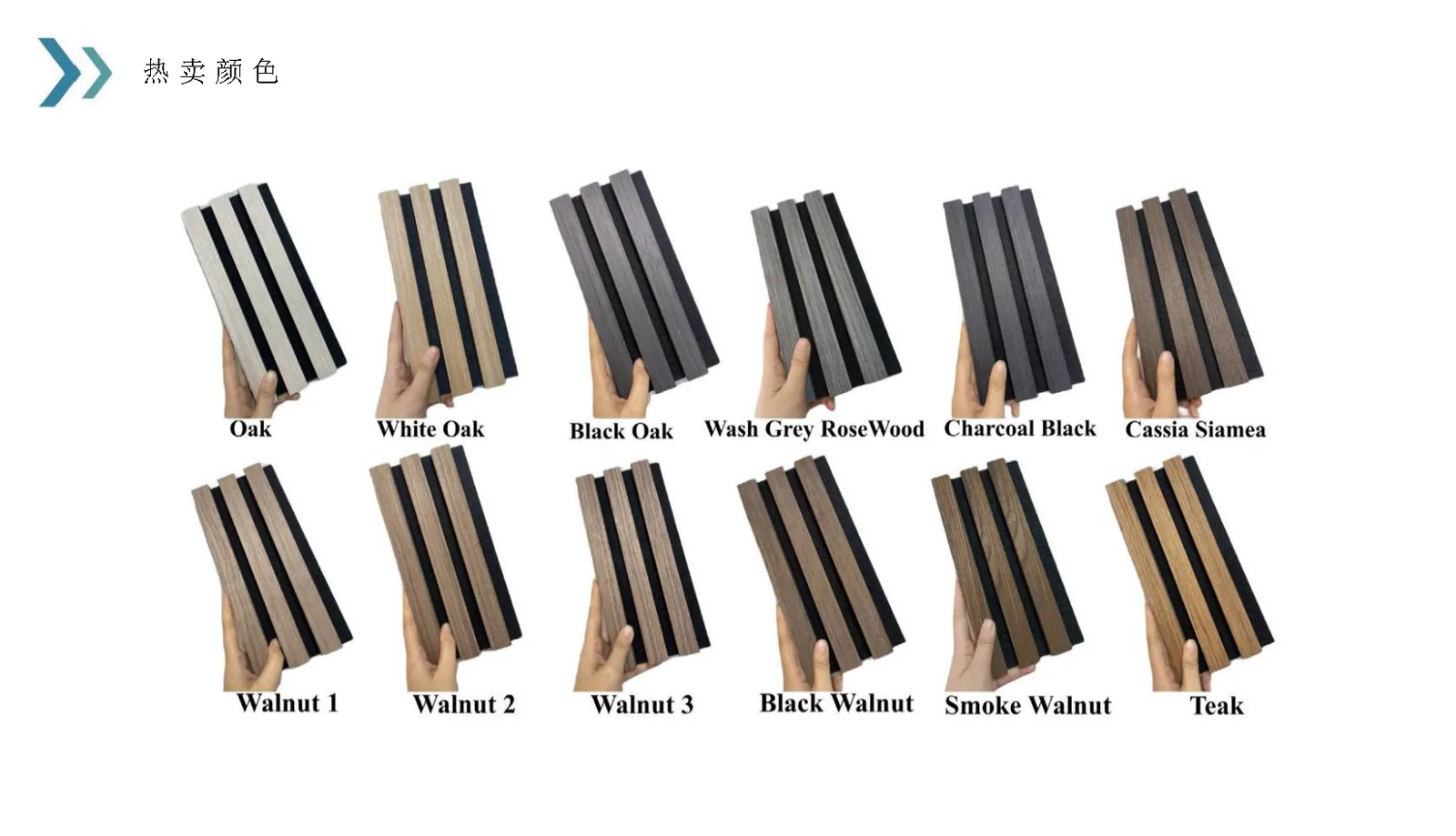
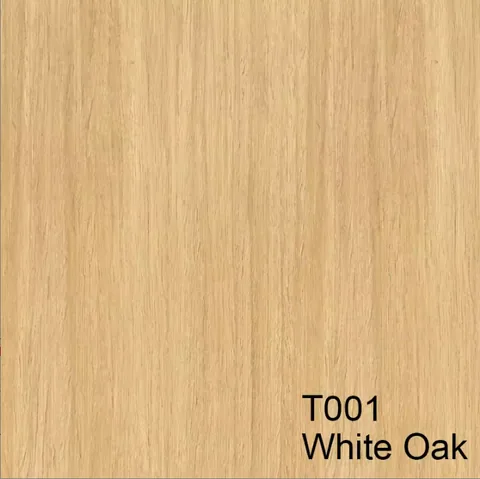
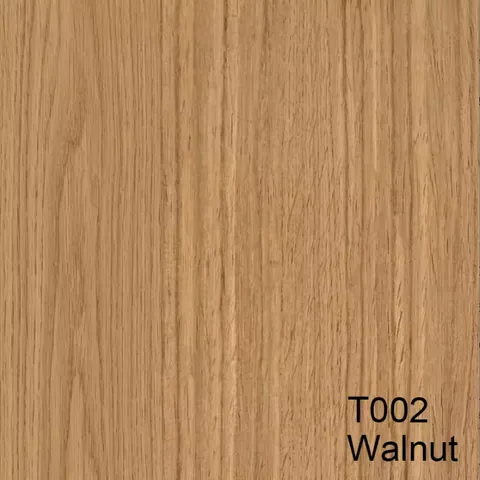
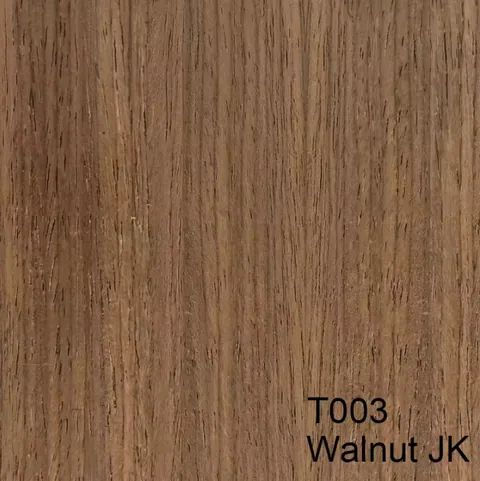
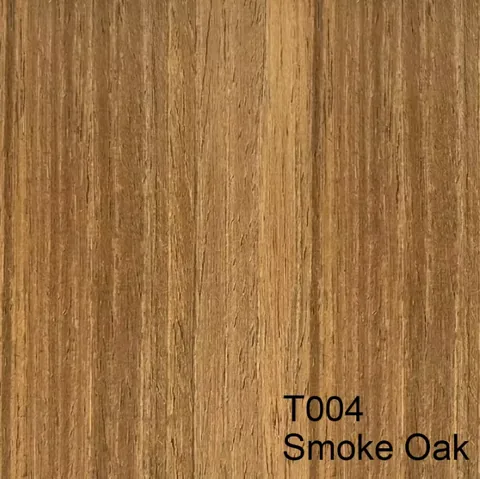
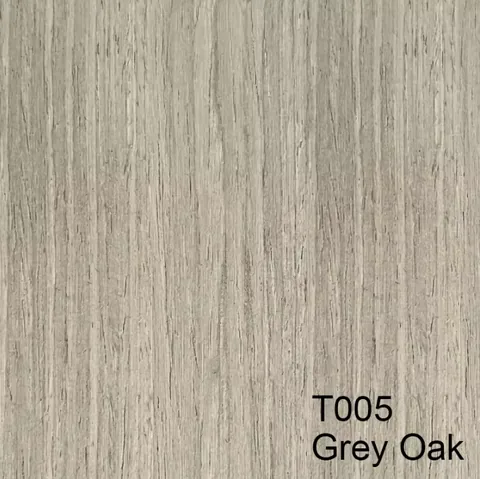
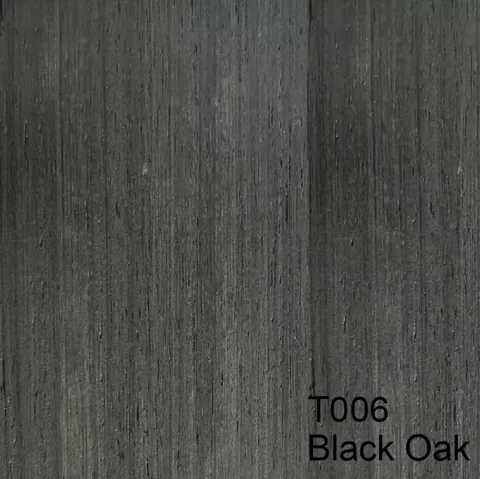
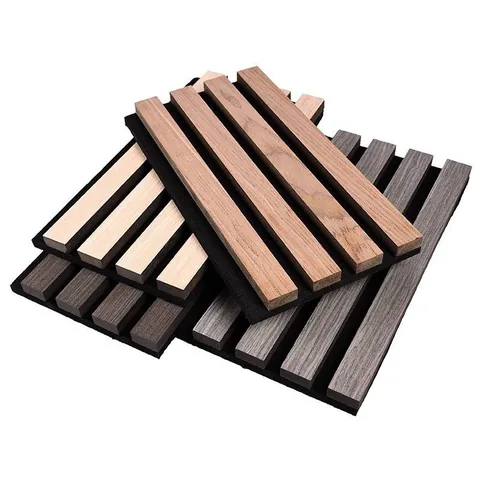
The T001–T009 cards below are cut from this range: white oak, walnut, smoked oak, grey oak, black oak, teak and brown oak grains. Pressed onto MDF, so the grain is consistent panel to panel.
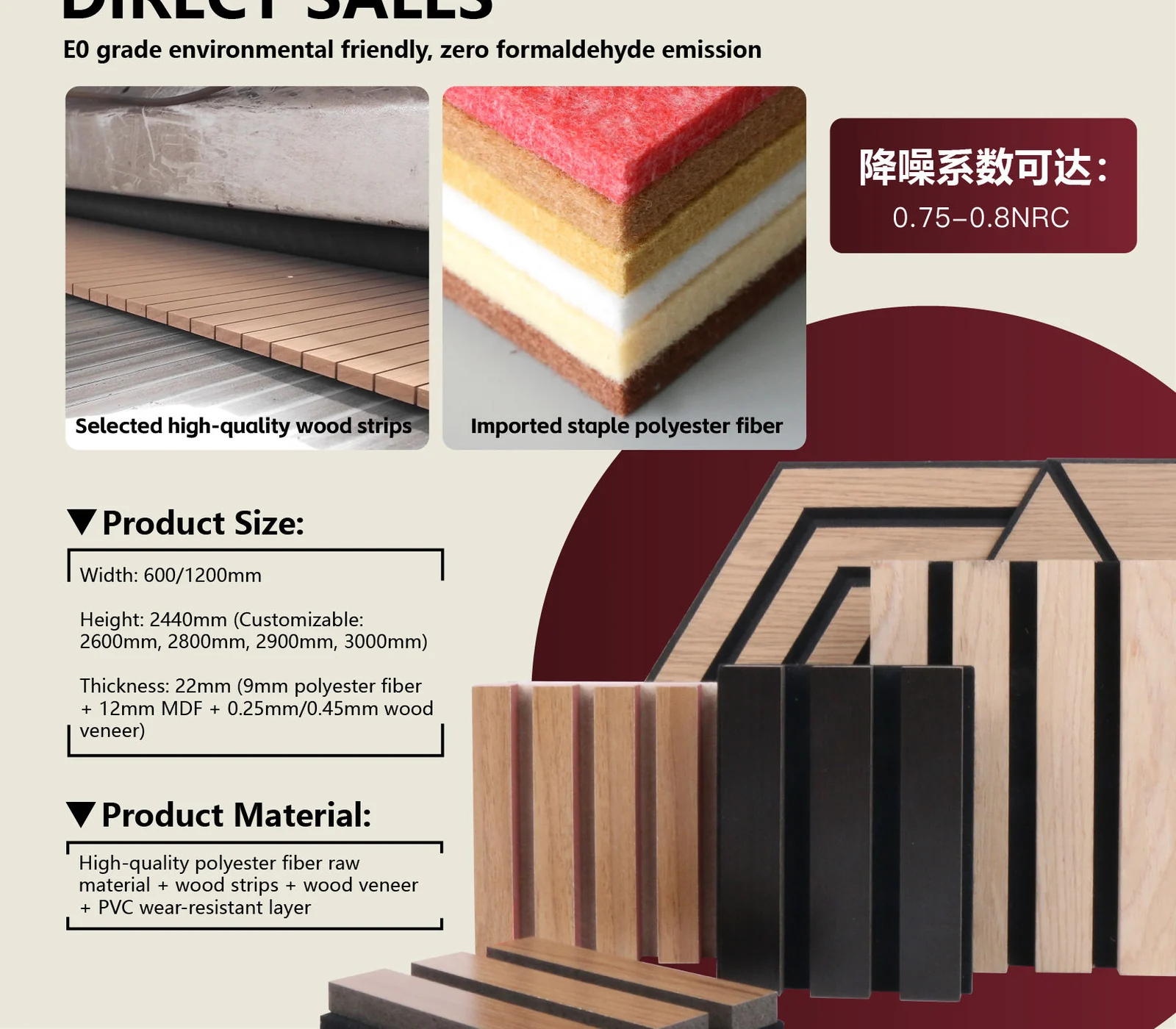
Three layers, one product family. Below: the construction, the measured absorption figures and the honest limits of both.
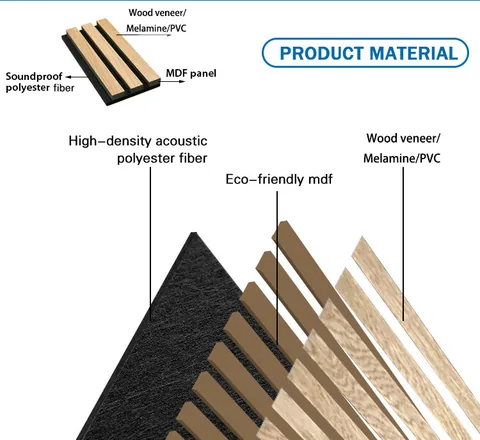
| Wearing face | MDF slats, 6 mm, 750 g/m² density, cut on a CNC. Carries the pattern and the rigidity. |
|---|---|
| Absorbing core | Polyester fibre felt in 500 / 800 / 900 / 1000 / 1350 g/m², 3–7 mm depending on the build. Open-cell, this is the layer that absorbs sound. |
| Backing | The felt itself acts as the backing. Shaped panels add a black MDF rear layer to hold the relief. |
| Finish | Technical wood veneer or PVC film, hot-pressed onto the slat face. |
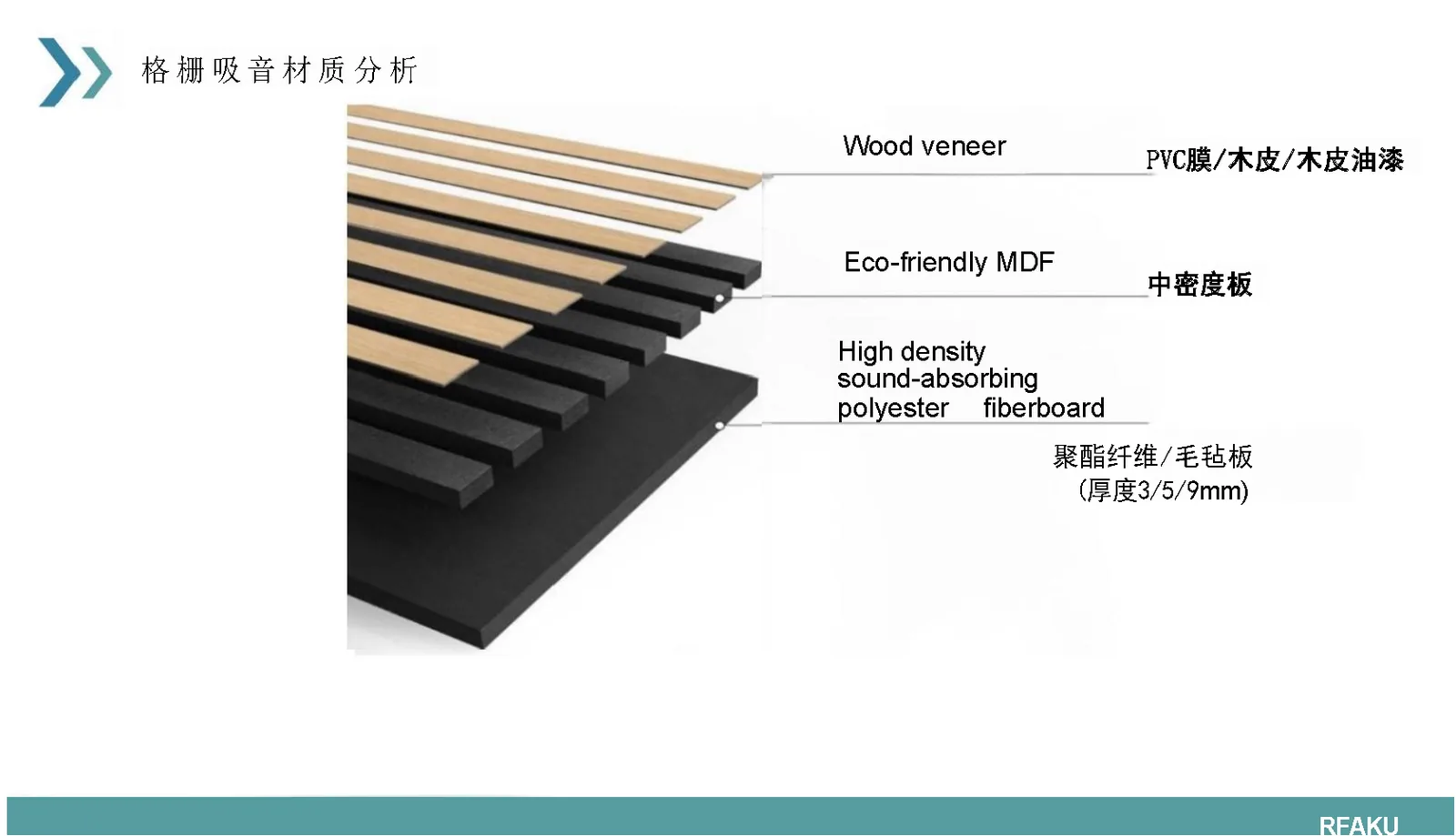
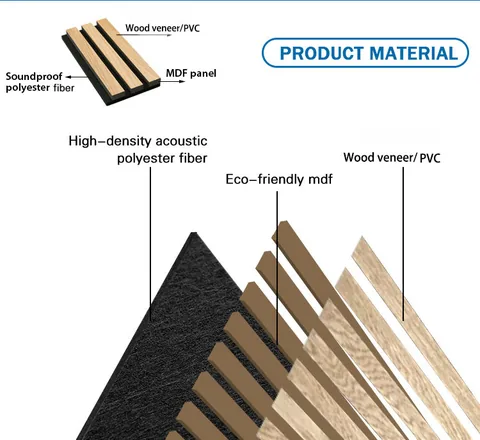
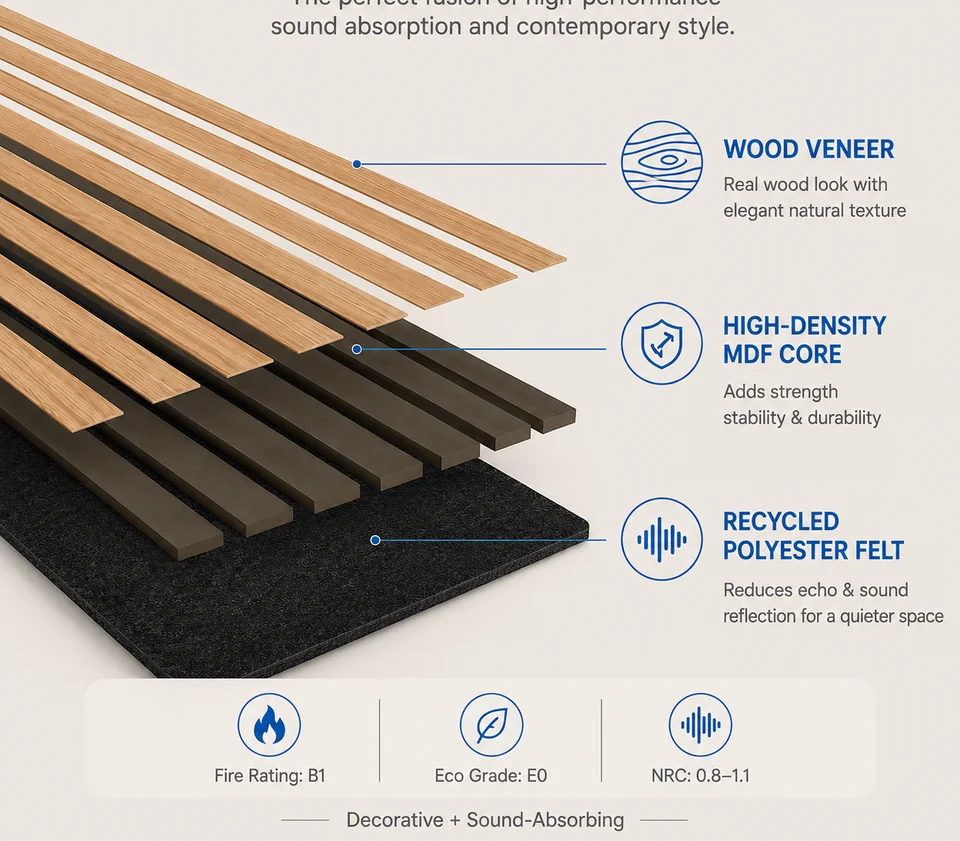
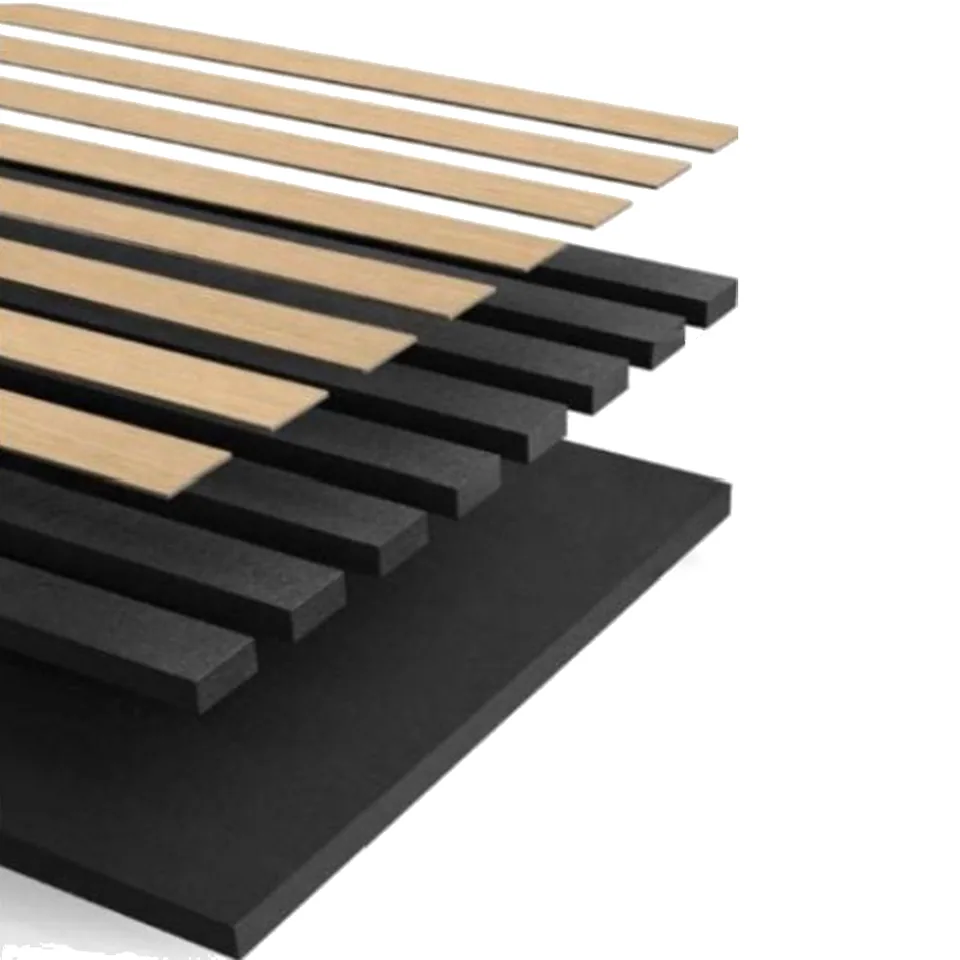
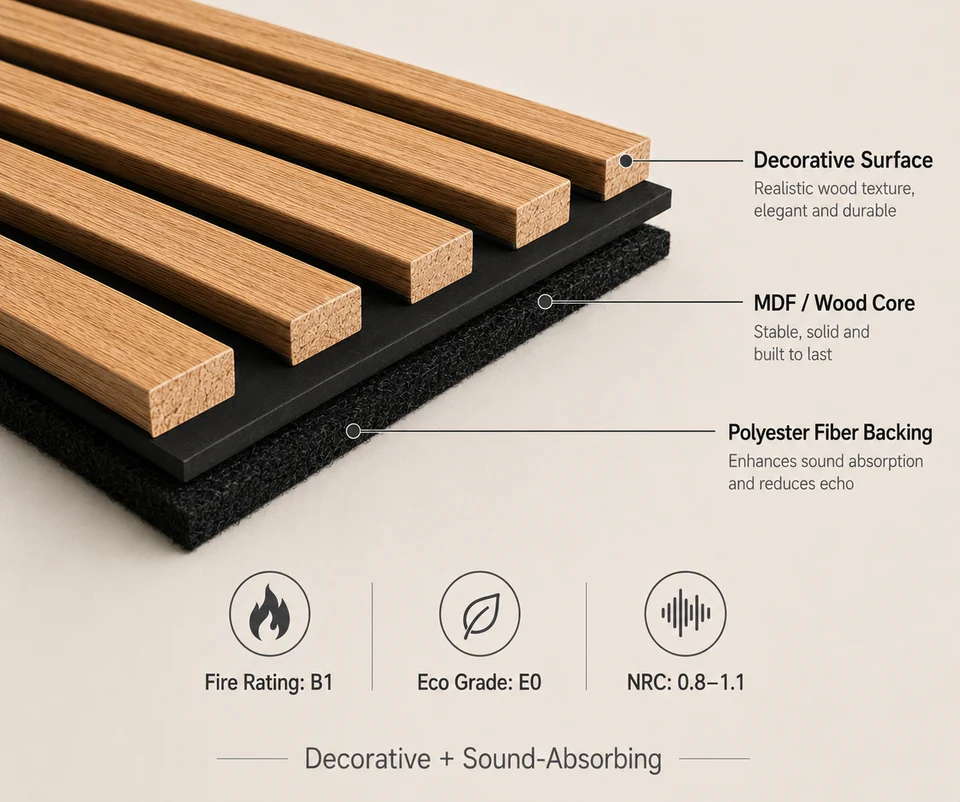
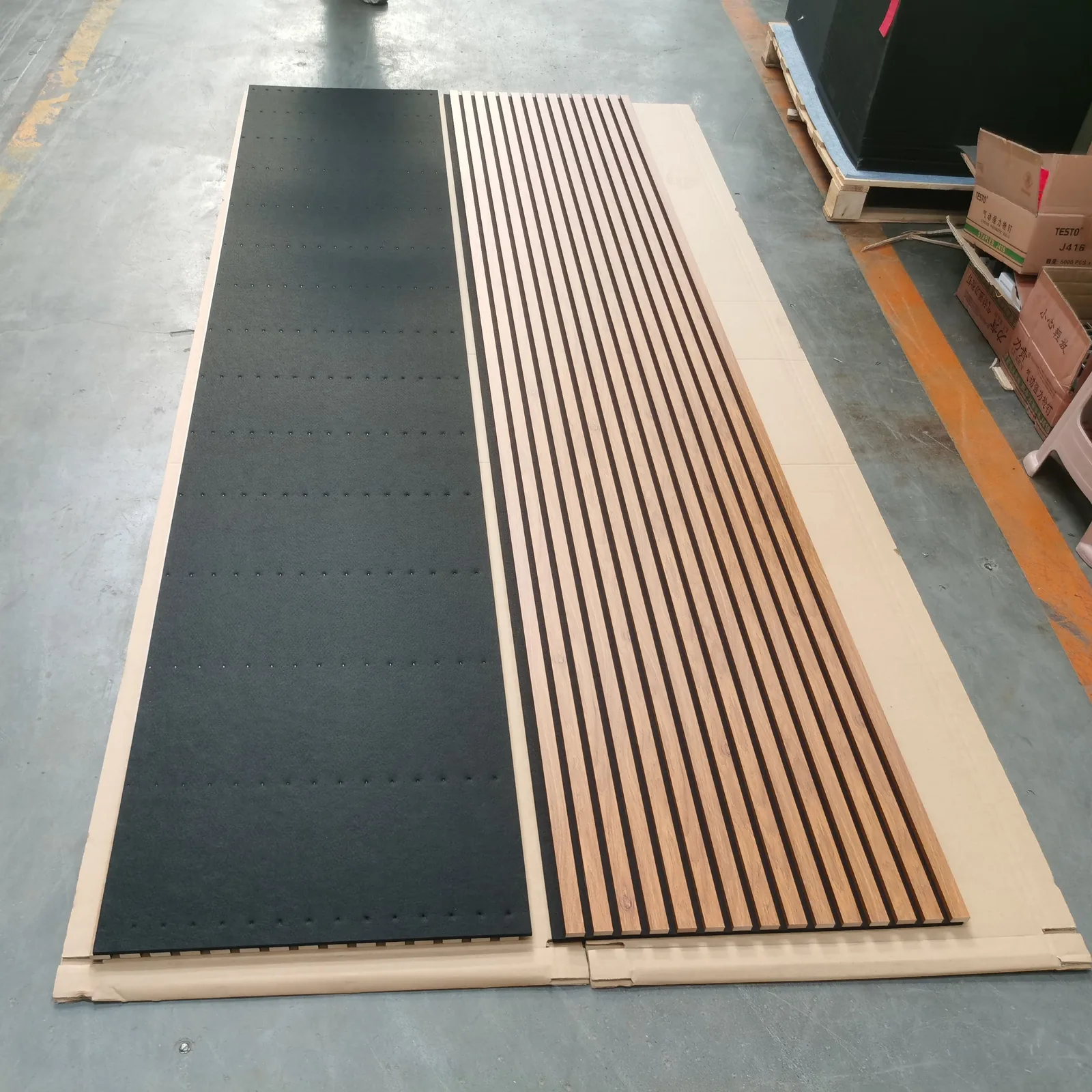
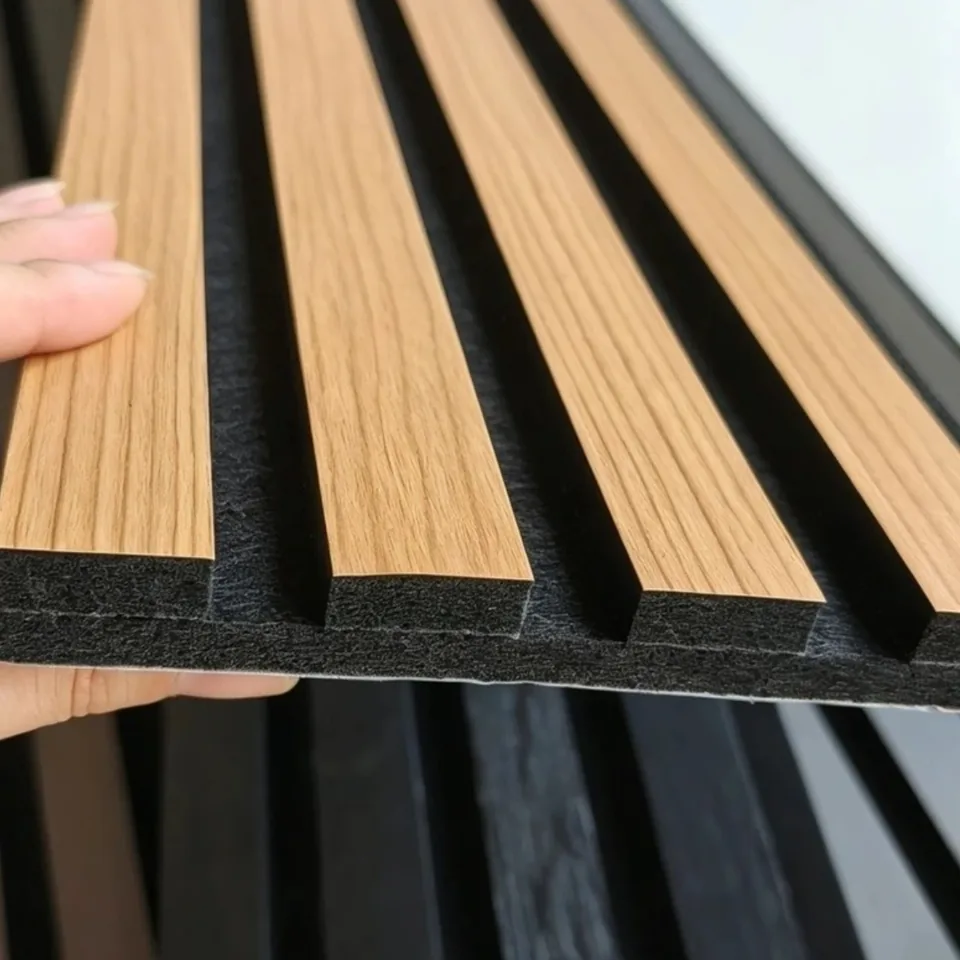
Slatted and perforated faces both work on the same principle: sound gets past the rigid face and is absorbed in the felt behind it. The difference is visual, and how much of the face stays reflective.
Noise Reduction Coefficient is a single-number average of absorption at 250, 500, 1000 and 2000 Hz. It is useful for comparing products and useless for predicting a room. Figures below are the average of our own sample tests, quoted as a range because the mounting method moves the result.
| Build | Felt | NRC (sample average) | Typical use |
|---|---|---|---|
| DT-1 · 9 mm | 3 mm / 500 g/m² | 0.75 – 0.80 | Corridors, light renovation |
| DT-2 · 11 mm | 5 mm / 800 g/m² | 0.75 – 0.80 | Offices, classrooms, retail |
| WQ-1 · 11 mm | 5 mm / 900 g/m² | 0.75 – 0.80 | Curves, columns, arches |
| WQ-2 · 18 mm | 9 mm / 1000 g/m² | 0.80 – 0.85 | Large radius columns, drum walls |
| WQ-3 · 12 mm | MDF 750 g/m², no felt layer | 0.60 – 0.70 | Tight radius, where build-up is critical |
| DT-3 · 16 mm | 7 mm / 1000 g/m² | 0.80 – 0.85 | Meeting rooms, lecture halls |
| DT-4 · 18 mm | 1350 g/m² | 0.80 – 0.85 | Ballrooms, cinema walls |
| DT-5 · 21 mm | 1350 g/m² | 0.80 – 0.85 | Studios, worship halls |
| YX series · 21 mm | 1350 g/m² | 0.80 – 0.85 | Feature walls, atriums |
These are our own sample averages, not a third-party test report. We do not publish a laboratory number we have not received — if your tender requires an accredited report, ask before you quote the project and we will tell you what exists for the model you need.
Add roughly 0.05 to the NRC and a clear improvement below 250 Hz. The most cost-effective upgrade in the range.
NRC is not enough. Ask your acoustic consultant for a reverberation-time calculation; we can supply panel dimensions and absorption data for the model.
Tell us the market and the standard it names. B1 and E0 are the figures we build to; whether a local test is additionally required is a question to settle before the order, not after.
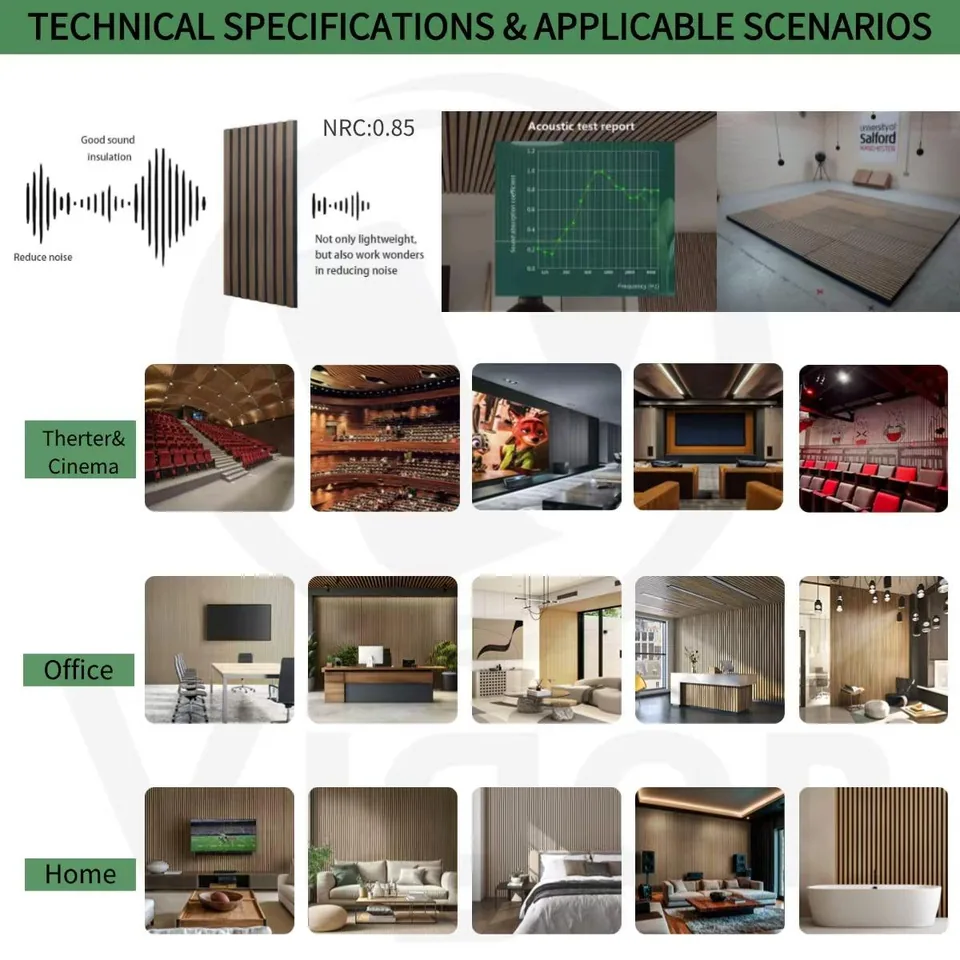
Fire rating B1 (China GB 8624) and formaldehyde emission E0 (GB 18580) are the grades the panel build is made to — the board and the felt together, not the veneer on its own. Ask us for the current test documentation for the model you are specifying before you put it into a tender file.
Local building codes vary. B1 and E0 satisfy the Chinese national standard — check whether your market requires an additional local test and tell us before the order, not after.
The numbered cards below are the veneer colours we keep in production. The number is the order reference: quote T004 and you get the smoked oak, not “a brown one”. The same card applies to straight, flexible and shaped panels, so a curved column and a flat wall can match.
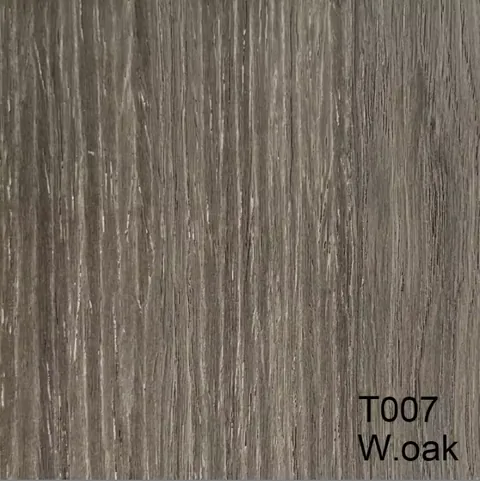
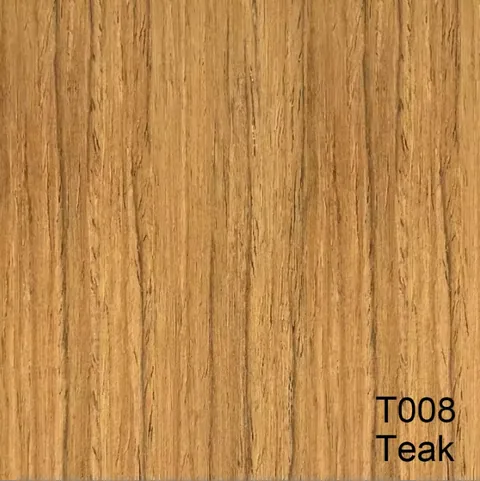
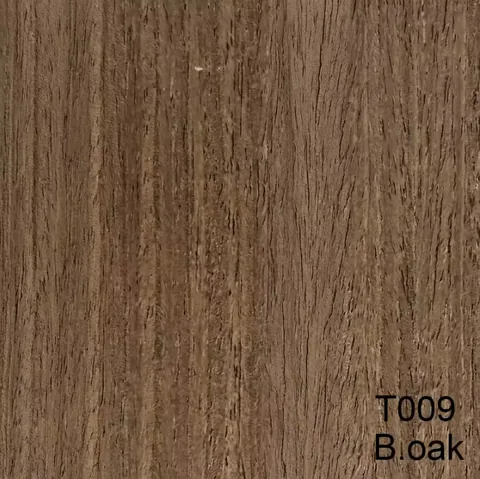
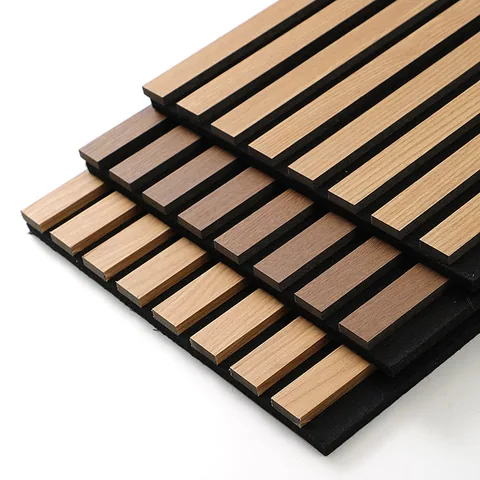
Technical wood veneer, or PVC film. The board, the felt and the fixing detail are the same; what changes is the face and how it behaves on site.
The T001–T009 cards below are cut from this range: white oak, walnut, smoked oak, grey oak, black oak, teak and brown oak grains. Pressed onto MDF, so the grain is consistent panel to panel.
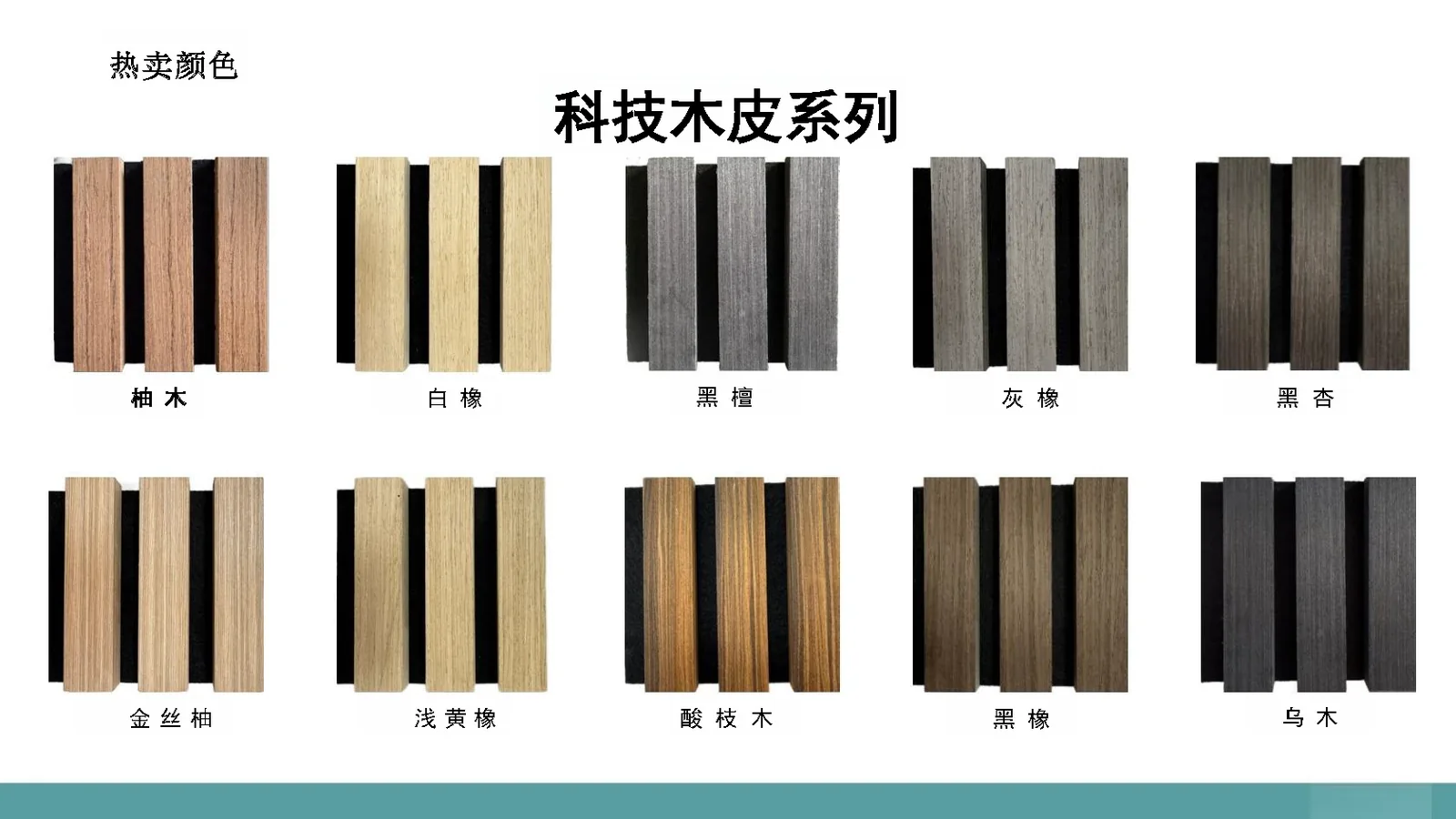
The pale end of the veneer range — ash, white oak and grey oak tones. The usual choice where a room is small and a dark grain would close it in.
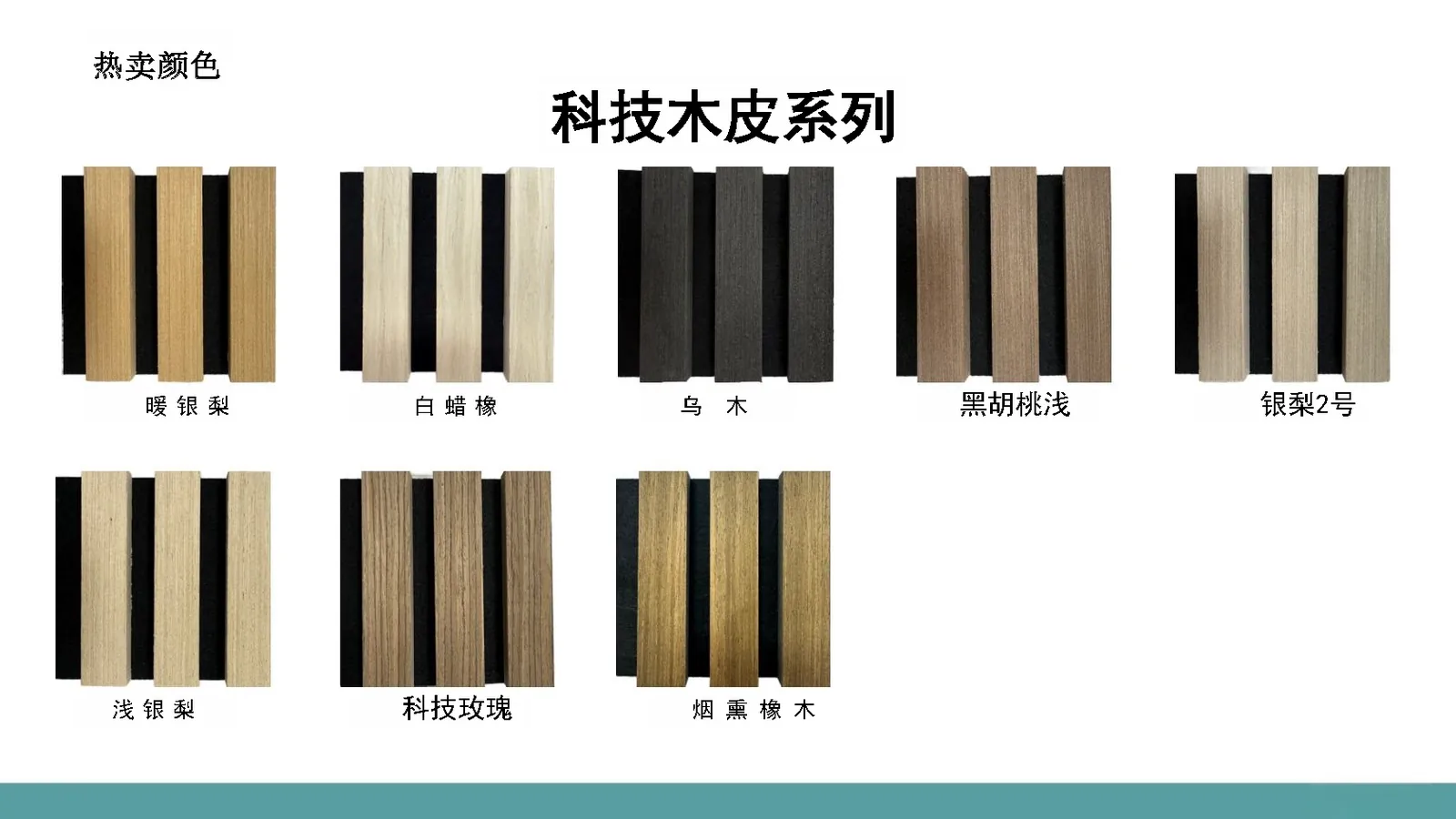
Walnut, smoked oak and wenge tones. Where the panel is a feature wall rather than background, this is the end of the range that gets specified.
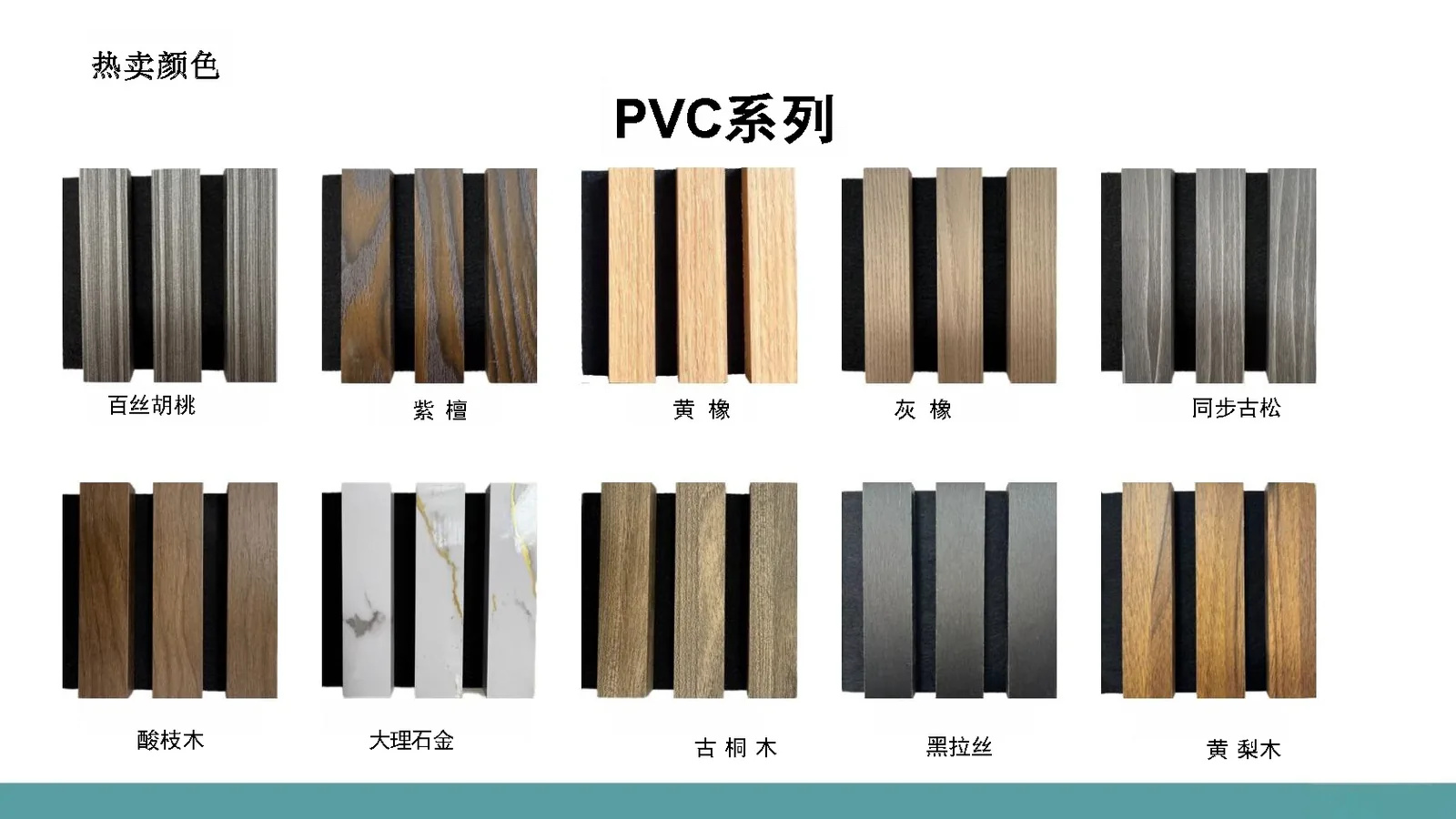
Wood-grain PVC: tighter colour consistency than veneer across repeat orders, and the finish we recommend where trolleys, chairs and cleaning equipment will hit the wall.
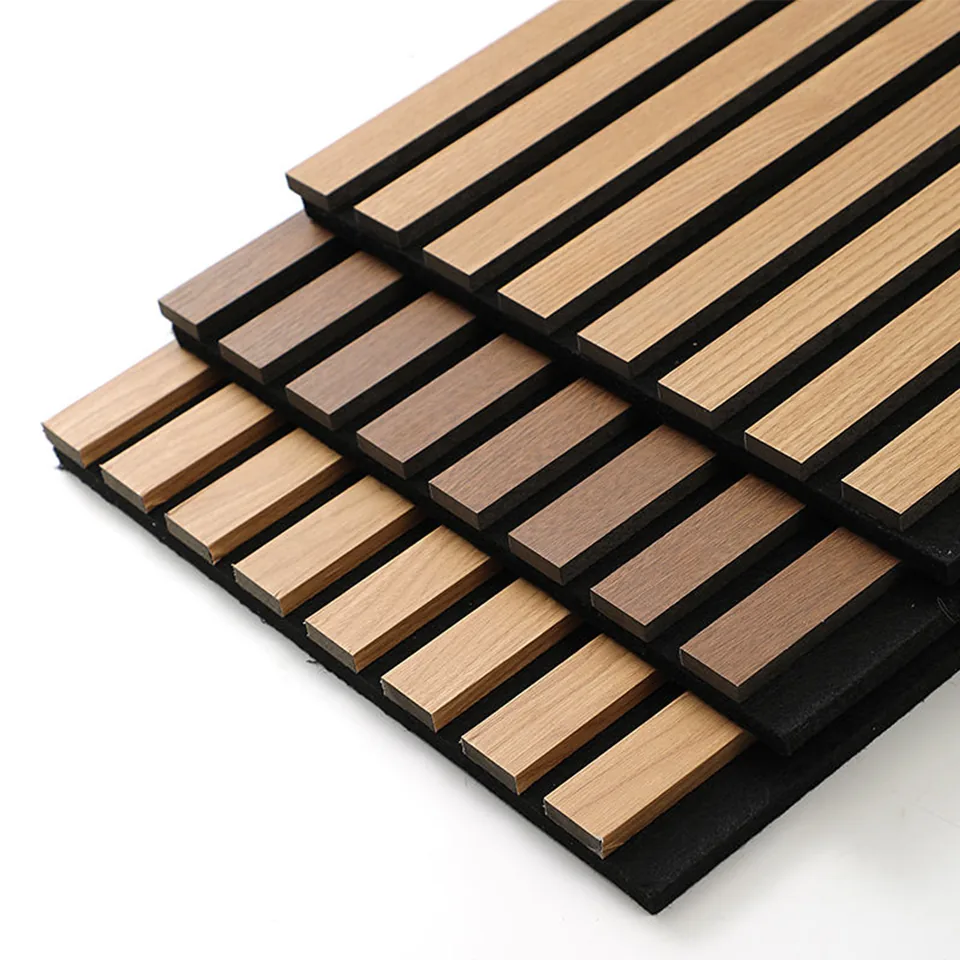
Every finish laid out at once. Use it to choose a family, then order the A4 sample — a screen is not a panel.
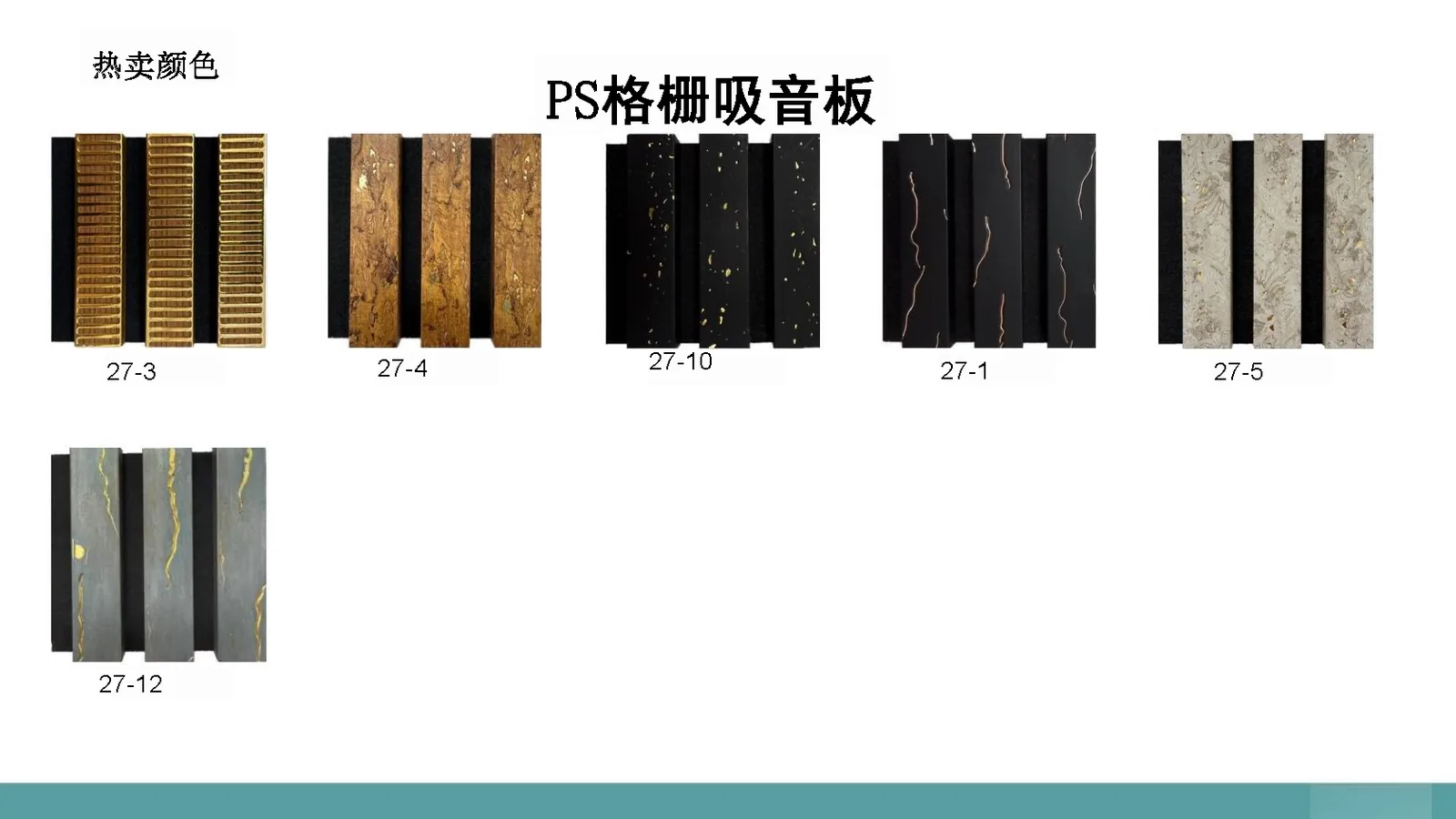
Flat, non-reflective finish for interiors where a sheen on the wall would show every fingerprint.
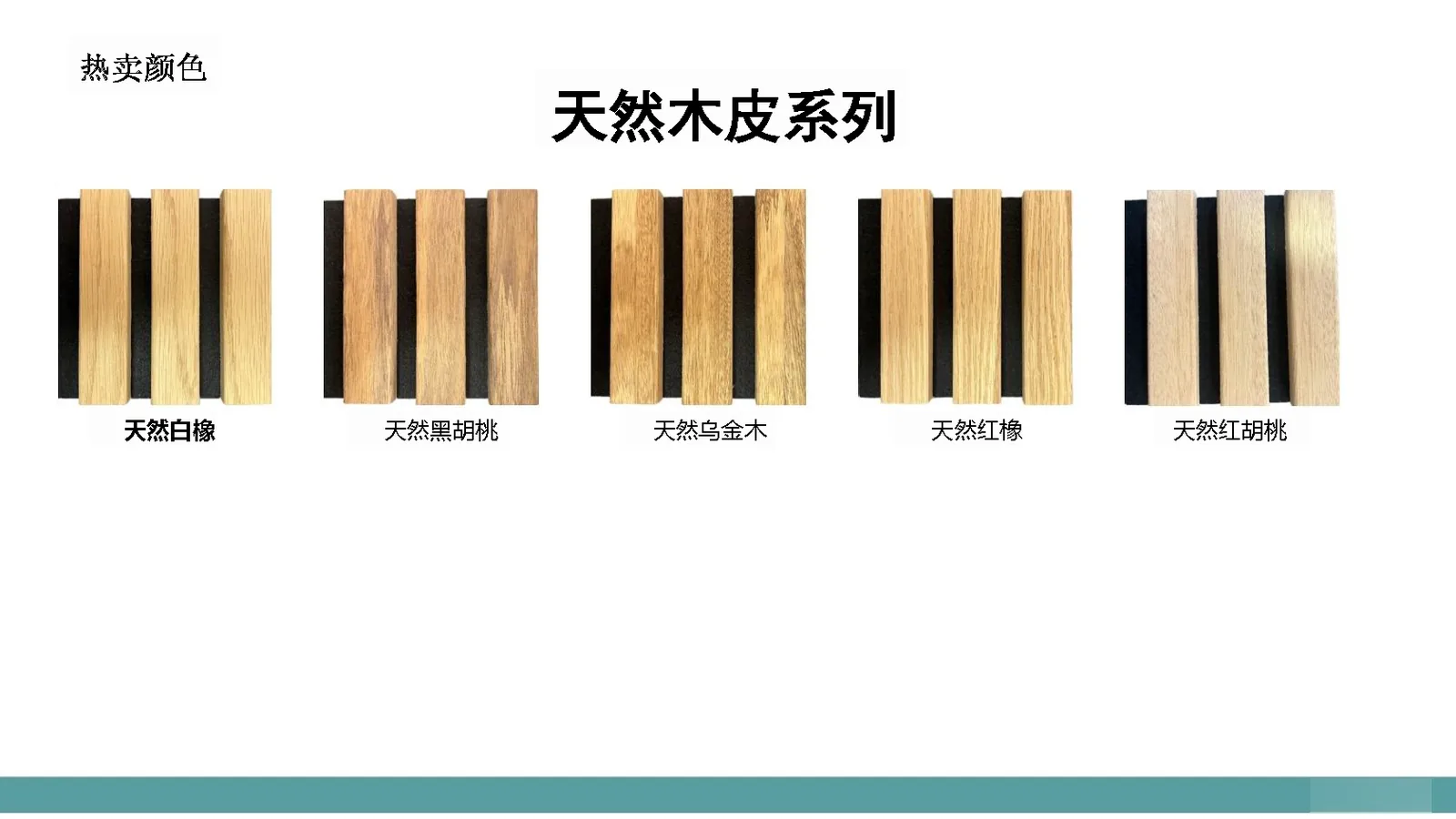
Light film tones for interiors that want the slat rhythm without a wood figure.
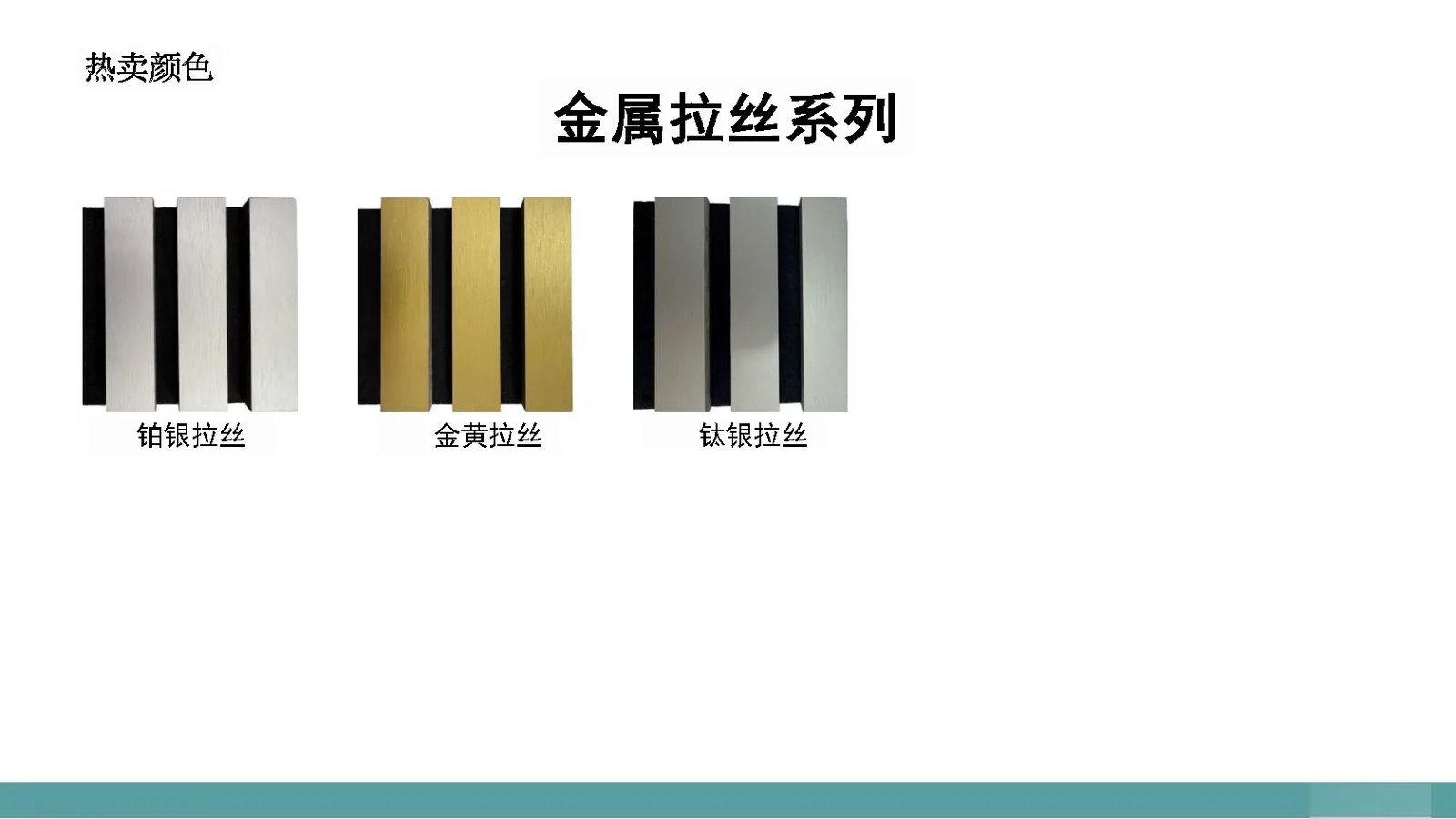
Brushed and mirror-effect film for retail and hospitality feature walls — decorative first, absorptive second.
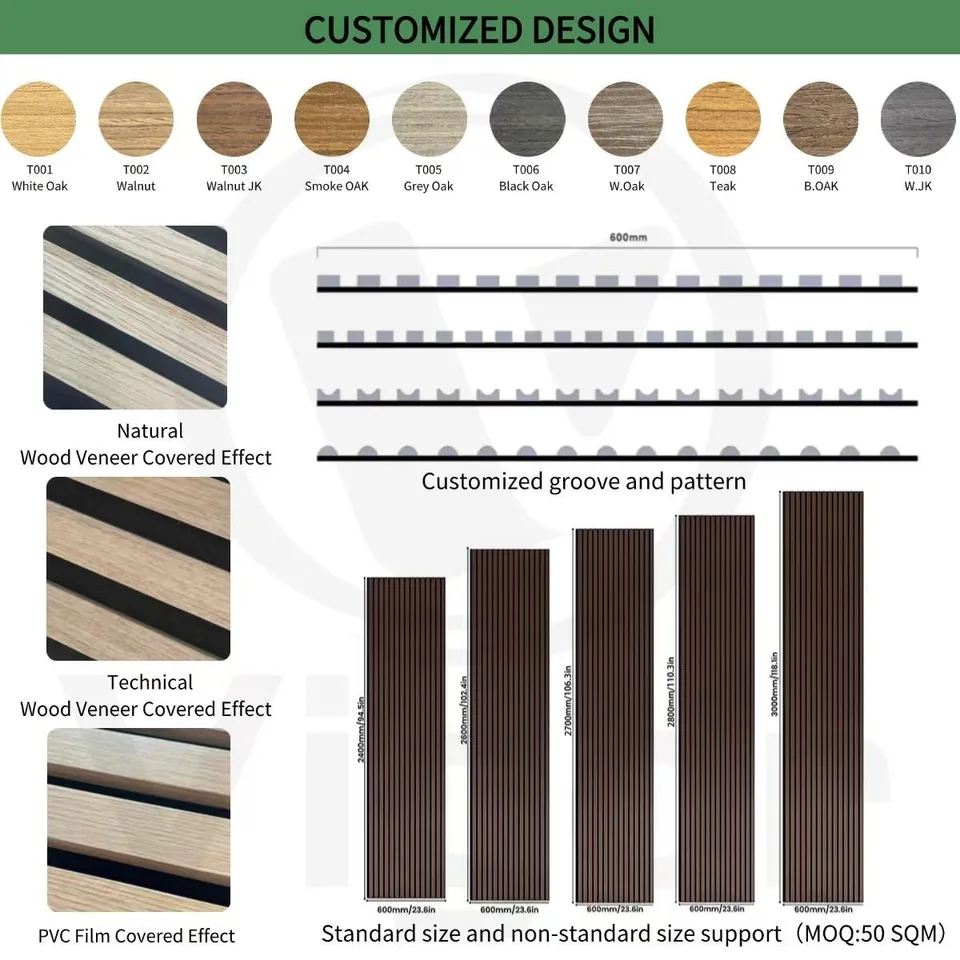
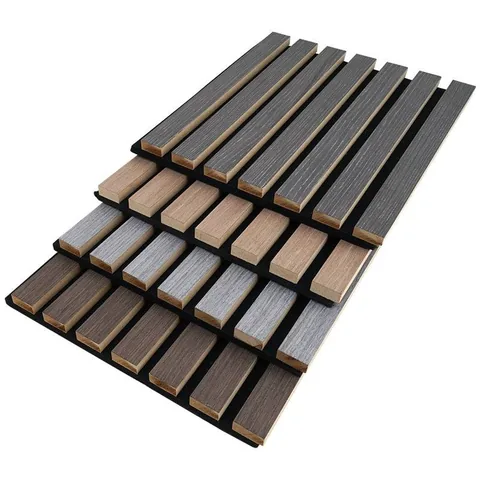
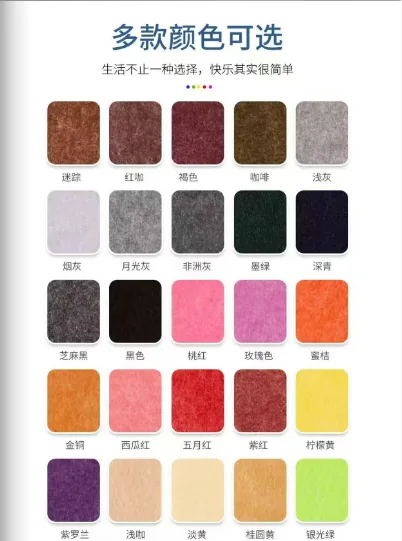
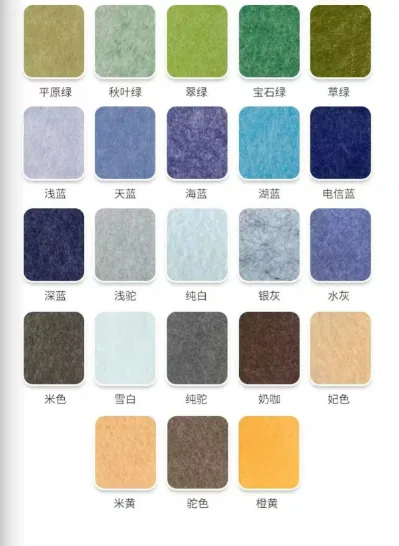
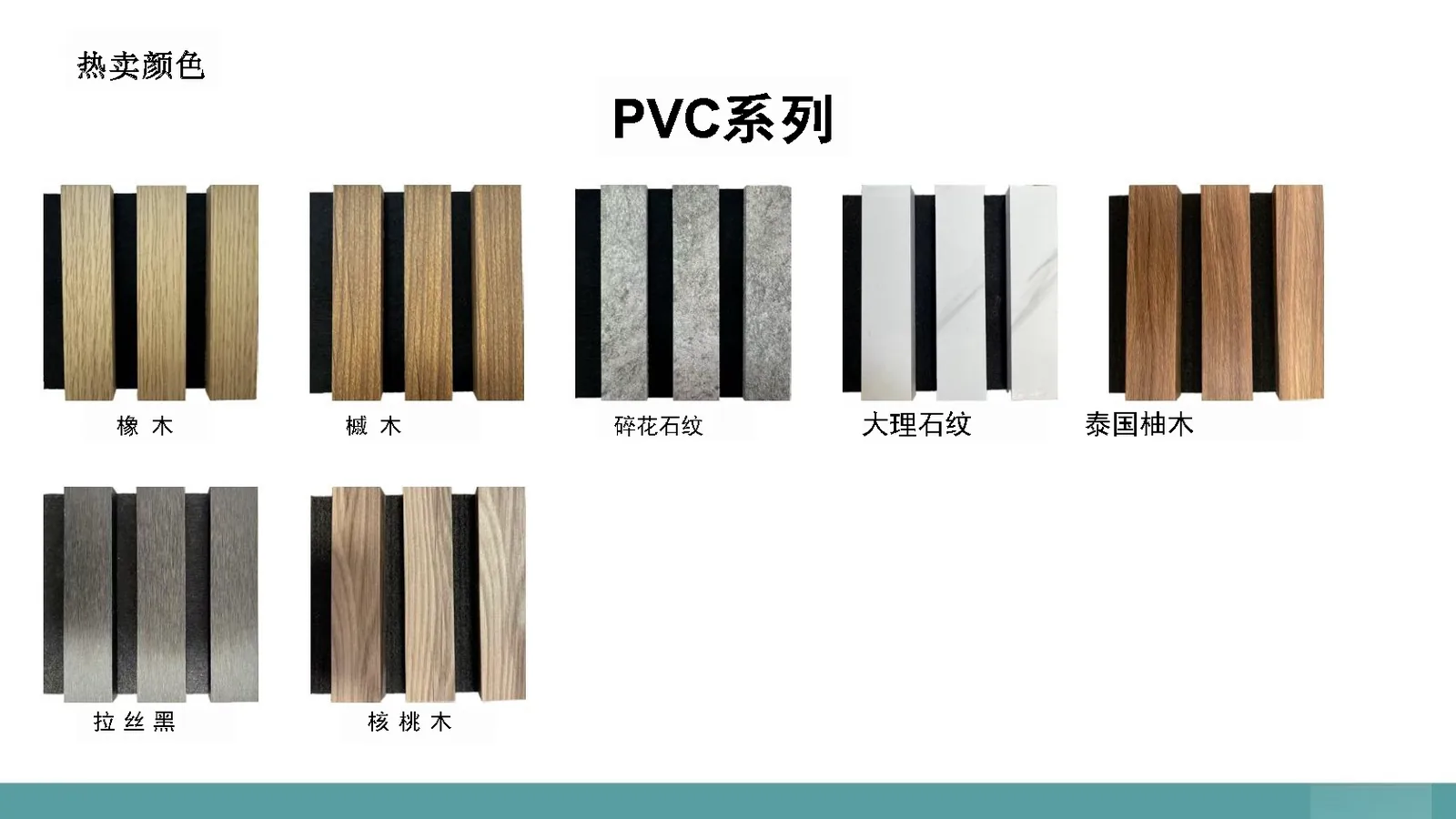
Screen colour is not panel colour. Every finish is available as a physical A4 sample — free, you pay the courier. Order the sample before you specify a colour on a full container of panels, and check it under the light that will be in the room.
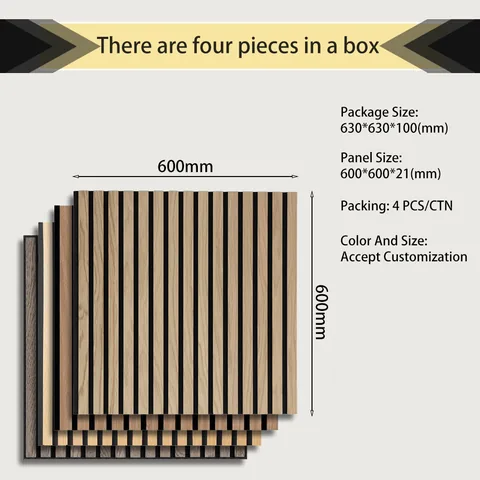
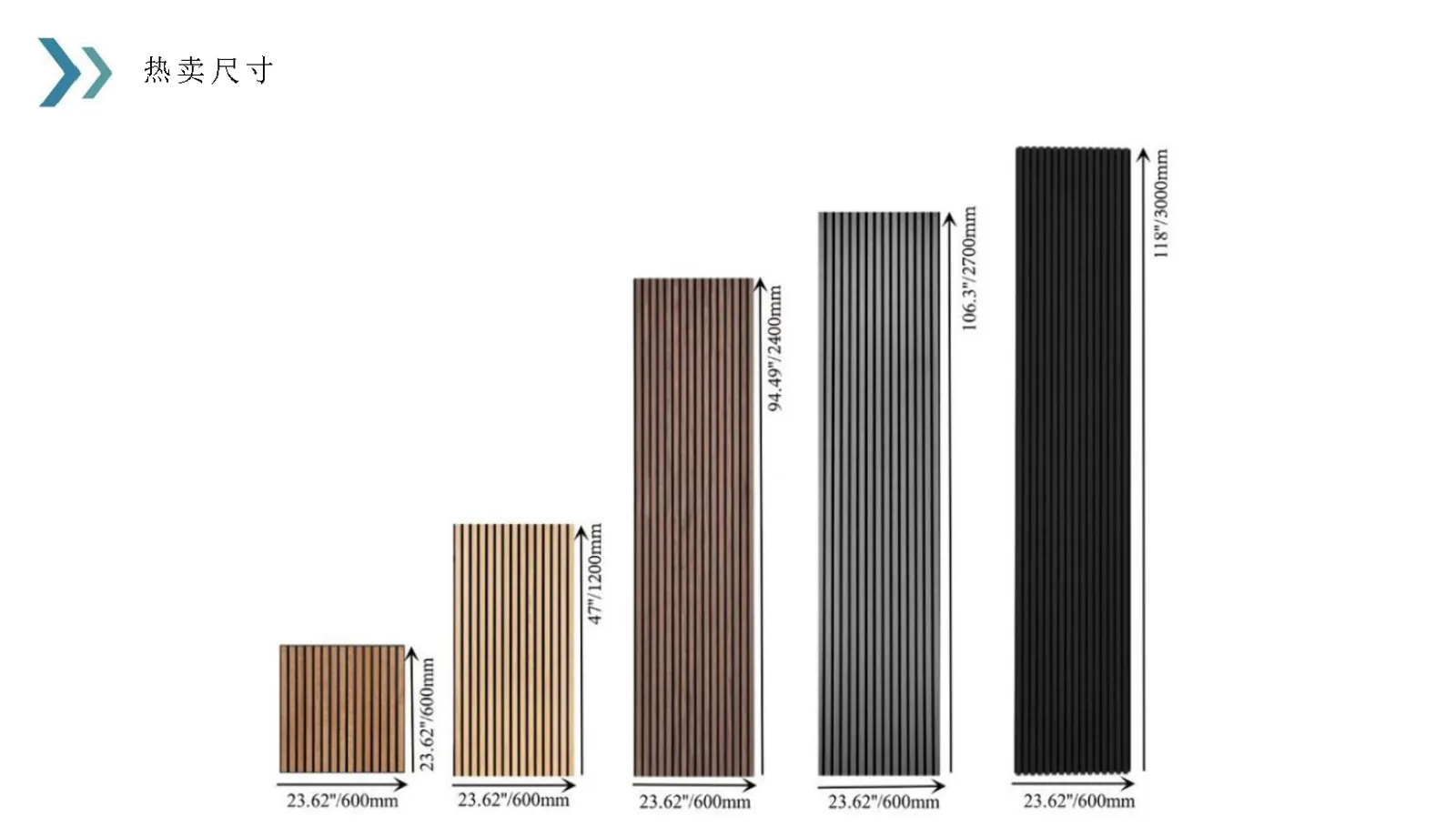
| Straight panel (DT-1 – DT-5) | 600 × 2400 mm · thickness 9 / 11 / 16 / 18 / 21 mm |
|---|---|
| Flexible panels (WQ-1 / WQ-2 / WQ-3) | 600 × 2400 mm · 11 / 18 / 12 mm · bends around columns and arches |
| Shaped panels (YX-1 – YX-13) | From 260 × 300 mm to 600 × 2400 mm, 21 mm, thirteen modules |
| Dimensional tolerance | The tolerance we work to is written into your contract; request it in writing with the quote and it is fixed before production starts |
| Custom size | Cut to your module from 300 m² per colour; confirm the drawing before we quote |
| Surface flatness | Checked by hand and against a straight edge before packing; a panel that rocks on the bench never reaches the carton |
We send the full data sheet — construction, NRC table, fire and emission test data, fixing details — as one PDF for your tender file.